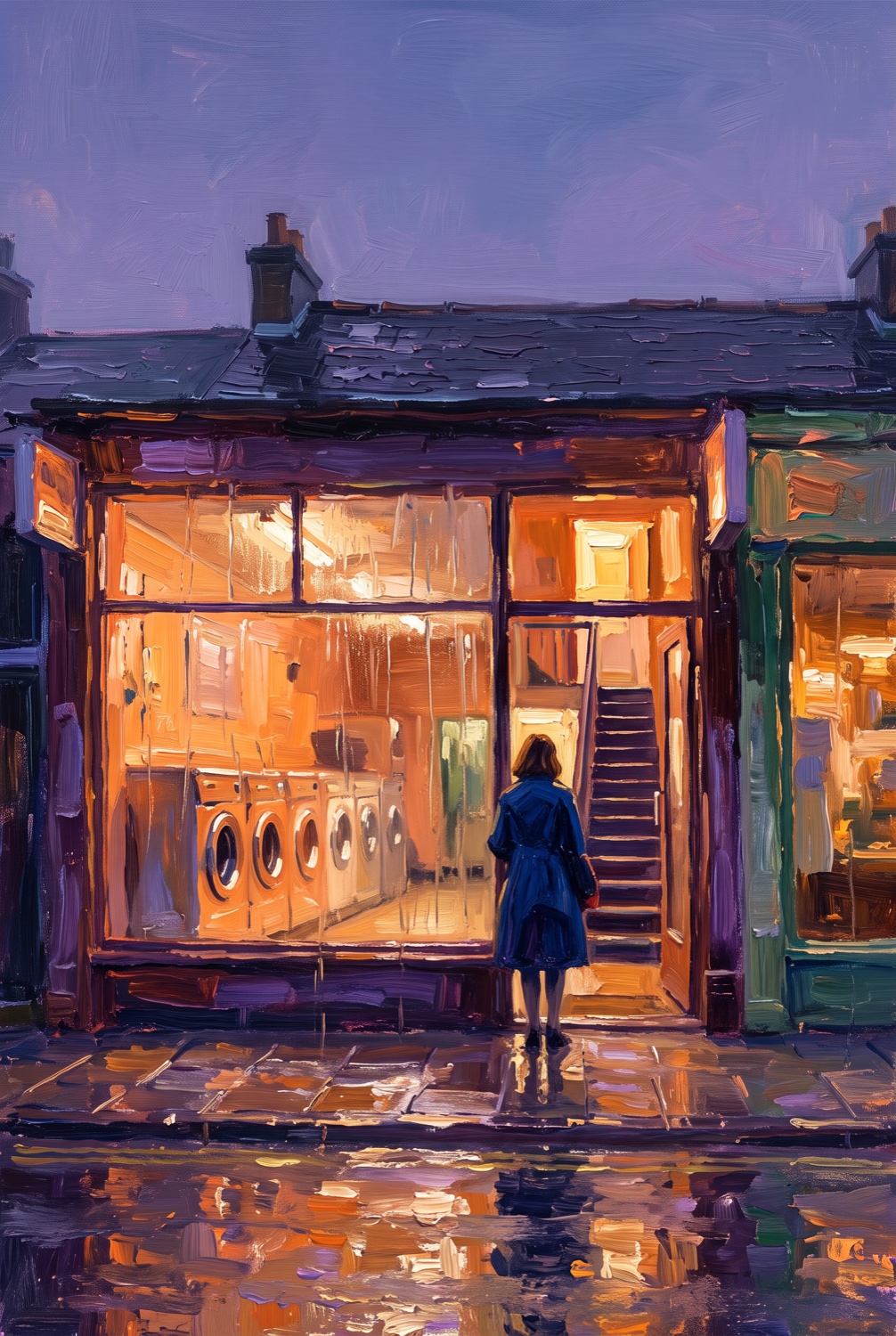
Chapter four
Biscuits
Seven chairs
I have brought shortbread. It was that or Jaffa Cakes, and I didn't know where the room stood on whether a Jaffa Cake is a biscuit.
Nobody takes one. They are all looking at me, and I am looking at the number.
A hundred and thirty-one thousand pounds, I say. Whose is it?
Ours, says Mrs Pell.
Whose, ours?
She points round the table with a teaspoon. Me. Dot. Bernadette. Priti. Kayleigh. Your Auntie Carol, God help us. And your mother. Twenty pounds a month each since March 1999. Kayleigh's only been coming since her nan passed and left her the chair.
I do it in my head. I'm not quick. But twenty pounds a month doesn't come to a hundred and thirty-one thousand. It doesn't come to half that.
No, says Priti, who hasn't looked up from her laptop. It comes to about forty-six thousand. The rest it made by itself.
Made how?
And six women who have known me since I was in a pram all breathe in at once, like a choir.
One at a time, says Mrs Pell. And plain. That's the rule, and it was your mother's. Nobody up here says a word they couldn't say in the launderette. If you can't explain it to Dot, you've no business putting your twenty pounds in it.
I'm sat here, says Dot.
A hundred pieces
Start with your father's shop, says Mrs Pell. Who owns it?
Dad.
How much of it?
All of it.
Say it was cut up. Say it was a hundred pieces, like a tray of parkin. How many has he got?
A hundred.
And Linda. Thirty-five years at that range, six days a week, burns up both arms. How many pieces did she have?
I don't say anything. The gas fire ticks.
None, says Auntie Carol. She had none. She had an apron.
That, says Mrs Pell, is the difference between working in a thing and owning a bit of it. You can work in a business your whole life and all it owes you is a wage, if you're lucky. Own a piece of it and it owes you a piece of whatever it makes. Whether you turned up or not. Whether you're asleep.
That's a share. That's all a share is. A piece of a business, with your name on.
But you can't buy a piece of Dad's shop, I say.
No. He's not selling. But the big firms do. A firm wants money, to build a new shop or a factory, so it cuts itself into pieces, millions of them, and sells them to anybody who'll have one. After that the pieces get bought and sold all day long between strangers. That's the stock market. It's only a market. People swapping pieces of businesses. There's no room any more, it's all on Priti's laptop.
So we own a piece of what?
The supermarket, for one. The big one on the ring road. That's the blue. Monday's sea, your mother called it, because it's dull and it's always there. I've shopped in it forty years. I know what's in my trolley and I know what's in everybody else's. So I thought, why am I only ever giving them money? Why aren't they giving me some?
How big a piece?
Priti turns the laptop round. If the supermarket was your father's tray of parkin, she says, we own a crumb you would need tweezers for. But it's a real crumb. When they make a profit, a crumb of it is ours. When they have a bad year, so do we.
Tell her about the price, says Bernadette. She was a nurse for forty-one years and she says it the way you'd say, sharp scratch.
The price of a piece goes up and down every day, says Mrs Pell. Not because the supermarket has changed since yesterday. Because people have changed their minds about what a piece is worth. They get excited, it goes up. They get frightened, it goes down. Some years it has gone down by a third and sat there. You can lose money. I want you to hear me say that. Anybody who tells you different is selling something.
We lost a fortune in 2008, says Carol, cheerfully.
We lost it on paper, says Priti.
It felt like a fortune, says Carol.
My phone goes before we're past the gasworks. A number I don't know. Mrs Pell has plainly never sent a text before.
ONE THING TO SEE IF IT STUCK
Which of these could you buy a piece of tomorrow morning?
One biscuit in the tin. Turn the page.